CloudArchitecture

AWS SNS vs SQS. A Practical Guide for DevOps and Cloud Architects

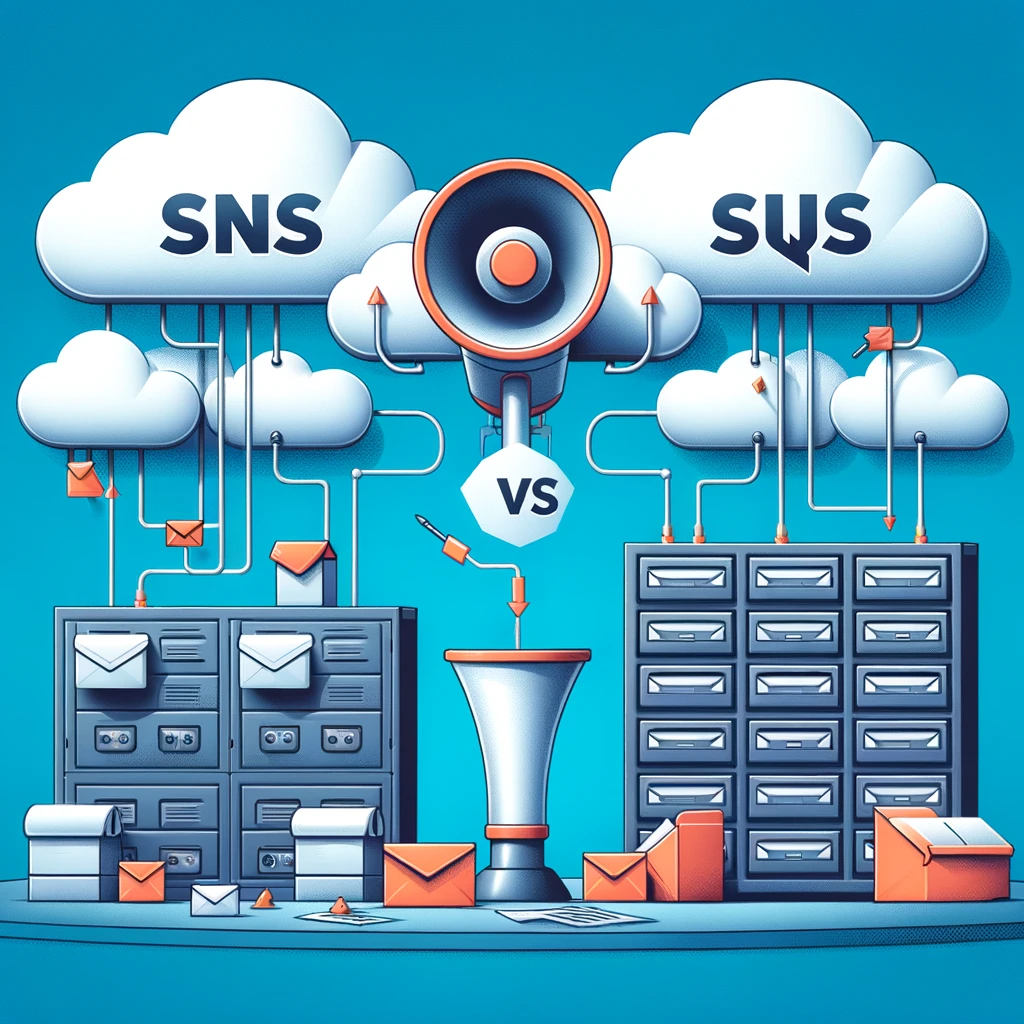
When embarking on the journey of cloud services, particularly within AWS, two critical services often come up for discussion: Simple Notification Service (SNS) and Simple Queue Service (SQS). Both play pivotal roles in message orchestration but serve different purposes.

What Are SNS and SQS?

AWS SNS, a fully managed pub/sub messaging service, excels in scenarios requiring real-time notifications. It is designed to quickly distribute messages to a wide range of subscribers, including both applications (Application-to-Application or A2A) and end-users (Application-to-Person or A2P), through various channels like email, SMS, and push notifications. The strength of SNS lies in its ability to facilitate immediate, push-based communication without persisting messages, making it ideal for time-sensitive information dissemination.

On the other hand, AWS SQS offers a secure, durable, and available hosted queue that lets you integrate and decouple distributed software systems and components. SQS supports at-least-once message delivery, ensuring that no message is lost and allowing for the processing of messages in a flexible manner. Messages in SQS can be persisted for a duration ranging from 1 minute to 14 days, providing a buffer that helps manage workload spikes without losing messages. This makes SQS more suited for scenarios where message processing can be deferred or needs to be distributed across multiple workers for scalability

While both services are powerful on their own, they can also be used together in some scenarios to leverage the benefits of both systems. For instance, using SNS topics to fan out messages to multiple SQS queues enables parallel processing of messages, thereby decoupling and scaling microservices, distributed systems, and serverless applications efficiently.

The choice between AWS SNS and SQS depends on the specific requirements of your application. SNS is your go-to for broadcasting real-time notifications to a wide audience quickly, whereas SQS is better suited for reliable, secure, and scalable message queuing for delayed processing. Understanding the key differences and use cases of these services is crucial for architecting robust, scalable, and efficient cloud-based applications. This introduction aims to provide a comprehensive overview of AWS SNS and SQS, highlighting their distinct features, use cases, and how they can be used together to build scalable and resilient applications.

The Technical Distinction

To delve deeper into the technical differences between AWS SNS and SQS, let’s consider their mechanisms and the implications for system design.

AWS SNS operates on a push-based model, which means that messages are actively sent or “pushed” to all the subscribers as soon as they are published. This immediate, proactive dissemination is useful when an event’s notification is time-sensitive, ensuring that all subscribers can react simultaneously. It’s particularly beneficial when you need to trigger multiple processes in response to a single event.

For instance, in an e-commerce scenario, as soon as a purchase is made, SNS can simultaneously notify inventory management to decrement stock, alert the billing service to invoice, and trigger an email confirmation to the customer. This concurrency is vital for maintaining real-time system responsiveness and is the hallmark of event-driven architectures.

AWS SQS, contrastingly, is based on a pull-based model, which relies on consumers to “poll” or check the queue for messages. This allows for messages to be processed in a controlled manner and at the pace that the consumer can handle. It’s the method of choice when the order of actions is critical, or when the workload needs to be regulated to prevent overloading the system.

For example, in processing transactions, an SQS queue could hold payment information until the fraud detection service is ready to evaluate it, thus preventing a bottleneck. It also allows for scaling as consumer processes can be added or removed according to the queue length, providing a mechanism for workload management.

To summarize, while SNS’s push model excels in immediate, wide-reaching notification, SQS’s pull model provides an orderly, manageable processing queue. The choice between them is not merely technical but strategic, depending on the nature and requirements of the tasks at hand.

A Practical Example: Credit Card Transactions

Imagine a user on an e-commerce site making a purchase. The moment they hit “buy,” a series of orchestrated events unfolds within the platform’s architecture, leveraging AWS’s SNS and SQS services.

Step 1: Transaction Initiation

A user’s purchase request is captured by a transaction processing web service. This service constructs a payload with transaction details such as the transaction ID, customer ID, email, and the amount charged.

Step 2: Credit Card Verification

The service then communicates with a Credit Card Authority Service—like Visa or MasterCard—to validate the transaction. Upon successful validation, the transaction is approved.

Step 3: Event Notification with SNS

This successful transaction is an event of interest to several components. Here, AWS SNS comes into play. The transaction details are published to an SNS topic, which acts like a loudspeaker announcing the event to various subscribed services.

Step 4: Diverse Service Actions

Various services are subscribed to this SNS topic, each with a different role. These include:

  • Customer Reminder Service: A Lambda function that sends a “Thank You” email to the customer.
  • Transaction Analytics Service: Hosted on EC2, this service pulls transaction data from an SQS queue. It’s responsible for updating daily order analytics and revenue calculations.
  • Fraud Detection Service: Also, on EC2, this service polls a separate SQS queue, analyzing transactions for potential fraud.

Each service retrieves information from its SQS queue at its pace, processing the data independently. This decoupling allows for parallel processing and independent scaling, enhancing system reliability and performance.

In this workflow, AWS SNS and SQS demonstrate their unique capabilities. SNS quickly disseminates information to all interested services, while SQS queues allow for orderly and independent processing of events. This synergy is key in crafting a resilient and efficient cloud-based e-commerce architecture.

Choosing Between SNS and SQS

When deciding whether to use SNS or SQS, ask yourself:

  • Do multiple systems need to know about an event immediately? If yes, SNS is your go-to.
  • Does a single system need to process the information of an event on its own schedule? If so, SQS fits the bill.

By utilizing SNS, you can ensure that all interested parties are instantly informed. With SQS, you grant systems the autonomy to process messages without the risk of losing them.

For the DevOps and Cloud Architects

When designing your system’s architecture, considering SNS and SQS is essential for a robust, scalable, and fault-tolerant message-handling framework. These services allow you to decouple your microservices, leading to a more resilient system where failures in one component don’t cascade to others.

Amazon Web Services (AWS) offers two fundamental messaging services: Amazon Simple Notification Service (SNS) and Amazon Simple Queue Service (SQS). SNS is a publish-subscribe messaging service, ideal for applications that need real-time notifications. It supports multiple protocols for message delivery, including email, SMS, HTTP, Lambda functions, and more. On the other hand, SQS is a message queuing service that is more suited for message processing use cases. It can persist messages from 1 minute to 14 days, making it suitable for delayed communication and processing messages in parallel.

The choice between SNS and SQS depends on the specific requirements of your application. SNS is best for broadcasting real-time notifications to a wide audience quickly, while SQS is better suited for reliable, secure, and scalable message queuing for delayed processing. Understanding the key differences and use cases of these services is crucial for architecting robust, scalable, and efficient cloud-based applications.

Architecting the Future: SNS and SQS as Cornerstones

In the domain of cloud architecture, the significance of comprehending and harnessing the capabilities of AWS SNS and SQS cannot be overstated. Whether you find yourself disseminating messages to a broad audience using SNS or ensuring the dependable delivery of messages with SQS, both services form the bedrock of a responsive and effective cloud architecture.

As you venture into the intricacies of these services, it’s crucial to recognize that the selection between SNS and SQS extends beyond the technical domain; it also encapsulates the design philosophy of your system. The fundamental question arises: Do you require notification or queuing? This seemingly simple query serves as a guiding beacon, leading you to the appropriate service, thereby enabling your architecture to flourish in the dynamic realm of AWS.

A Comparative Look at Cloud Engineers and DevOps Engineers

The roles of Cloud Engineers and DevOps Engineers have emerged as pivotal to the success of technology-driven businesses. While the titles might sound similar and are sometimes used interchangeably, each role carries distinct responsibilities, objectives, and skill sets. However, there’s also a significant overlap, creating a synergy that drives efficiency and innovation.

Understanding the Roles

Cloud Engineer: A Cloud Engineer’s primary focus is on the creation and management of cloud infrastructure. This role ensures that the applications developed by a company can seamlessly run on cloud platforms. Cloud Engineers are akin to architects and builders in the digital realm. They must be knowledgeable about various cloud services and understand how to configure them to meet the company’s business needs and requirements. For instance, if a company requires a global presence, a Cloud Engineer will configure the cloud services to ensure efficient and secure distribution across different geographic regions.

DevOps Engineer: The term “DevOps” blends development and operations, aiming to harmonize software development (Dev) with IT operations (Ops). The primary goal of a DevOps Engineer is to shorten the development lifecycle, fostering a culture and environment where building, testing, and releasing software can happen rapidly, frequently, and more reliably. They focus on automating and streamlining the software release process to ensure fast, efficient, and bug-free deployments.

Differences and Overlaps

While the core objectives differ, Cloud Engineers focus on infrastructure, and DevOps Engineers on the software release process, their paths intertwine in the realm of automation and efficiency. Both roles aim to simplify complexities, albeit in different layers of the IT ecosystem.

Overlap: Both roles share a common ground when it comes to automating tasks to enhance performance and reliability. For instance, both Cloud and DevOps Engineers might utilize Infrastructure as Code (IaC) to automate the setup and management of the infrastructure. This synergy is pivotal in environments where rapid deployment and management of infrastructure are crucial for the business’s success.

Distinctive Responsibilities: Despite the overlaps, each role has its distinct responsibilities. Cloud Engineers are more focused on the cloud infrastructure’s nuts and bolts (ensuring that the setup is secure, reliable, and optimally configured). On the other hand, DevOps Engineers are more aligned with the development side, ensuring that the software release pipeline is as efficient as possible.

Toolkits and Discussion Points: DevOps Engineers vs. Cloud Architects

Both, DevOps Engineers and Cloud Architects arm themselves with an array of tools and frameworks, each tailored to their unique responsibilities.

DevOps Engineer: The Automation Maestro

Tools and Frameworks:

  • IDEs and Code Editors: DevOps Engineers frequently use powerful IDEs like Visual Studio Code or JetBrains IntelliJ for scripting and automation. These IDEs support a multitude of languages and plugins, catering to the versatile nature of DevOps work.
  • Automation and CI/CD Tools: Jenkins, Travis CI, GitLab CI, and CircleCI are staples for automating the software build, test, and deployment processes, ensuring a smooth and continuous integration/continuous deployment (CI/CD) pipeline.
  • Infrastructure as Code (IaC) Tools: Tools like Terraform and AWS CloudFormation allow DevOps Engineers to manage infrastructure using code, making the process more efficient, consistent, and error-free.
  • Configuration Management Tools: Ansible, Puppet, and Chef help in automating the configuration of servers, ensuring that the systems are in a desired, predictable state.
  • Containerization and Orchestration Tools: Docker and Kubernetes dominate the container ecosystem, allowing for efficient creation, deployment, and scaling of applications across various environments.

Meeting Discussions: In team meetings, DevOps Engineers often discuss topics such as optimizing the CI/CD pipeline, ensuring high availability and scalability of services, automating repetitive tasks, and maintaining security throughout the software development lifecycle. The focus is on streamlining processes, enhancing the quality of releases, and minimizing downtime.

Cloud Architect: The Digital Strategist

Tools and Frameworks:

  • Cloud Service Providers’ Consoles and CLI Tools: AWS Management Console, Azure Portal, and Google Cloud Console, along with their respective CLI tools, are indispensable for managing and interacting with cloud resources.
  • Diagram and Design Tools: Tools like Lucidchart and Draw.io are frequently used for designing and visualizing the architecture of cloud solutions, helping in clear communication and planning.
  • Monitoring and Management Tools: Cloud Architects rely on tools like AWS CloudWatch, Google Operations (formerly Stackdriver), and Azure Monitor to keep a vigilant eye on the performance and health of cloud infrastructure.
  • Security and Compliance Tools: Ensuring that the architecture adheres to security standards and compliance requirements is crucial, making tools like AWS Config, Azure Security Center, and Google Security Command Center key components of a Cloud Architect’s toolkit.

Meeting Discussions: Cloud Architects’ meetings revolve around designing robust, scalable, and secure cloud solutions. Discussions often involve evaluating different architectural approaches, ensuring alignment with business goals, complying with security and regulatory standards, and planning for scalability and disaster recovery.

Harmonizing Tools and Talents

While the tools and discussion points highlight the distinctions between DevOps Engineers and Cloud Architects, it’s the harmonious interaction between these roles that empowers organizations to thrive in the digital era. DevOps Engineers’ focus on automation and process optimization complements Cloud Architects’ strategic approach to cloud infrastructure, together driving innovation, efficiency, and resilience.

The Big Picture

The roles of Cloud Engineers and DevOps Engineers are not isolated but rather parts of a larger ecosystem aimed at delivering value through technology. While a Cloud Engineer ensures that the infrastructure is robust and poised for scalability and security, a DevOps Engineer ensures that the software lifecycle—from coding to deployment—is streamlined and efficient.

In an ideal world, these roles should not be siloed but should work in tandem. A robust cloud infrastructure is of little use if the software deployment process is sluggish, and vice versa. Hence, understanding the nuances, differences, and overlaps of these roles is not just academic but pivotal for businesses aiming to leverage technology for growth and innovation.

As technology continues to evolve, the lines between different IT roles might blur, but the essence will remain the same—delivering value through efficient, secure, and innovative technological solutions. Whether you are a Cloud Engineer ensuring the reliability and security of the cloud infrastructure or a DevOps Engineer automating the pipeline for a smoother release process, your role is crucial in the grand tapestry of modern IT operations.